Cabo Pulmo Divers
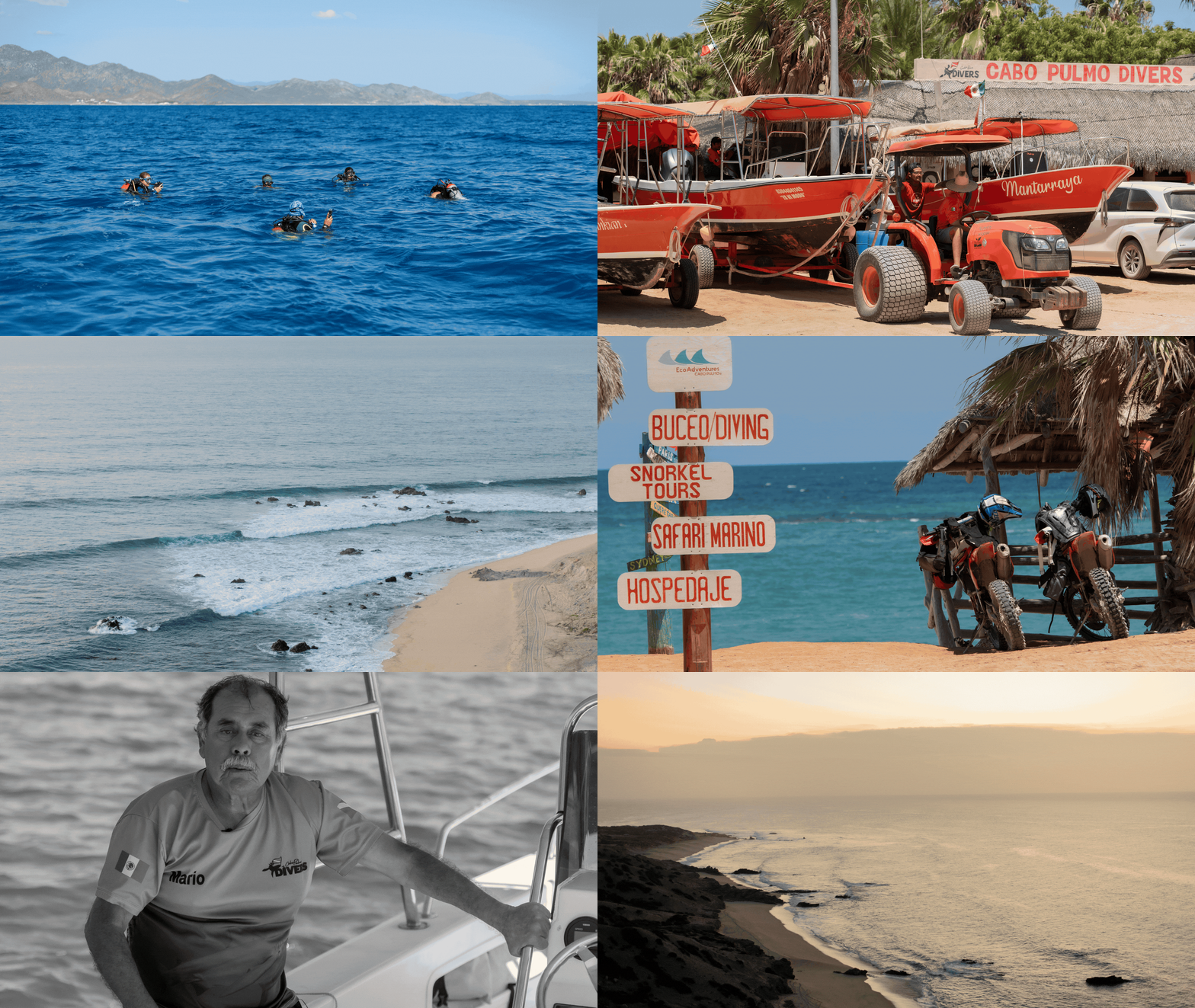
Fotografías: Jorge Alcalá Goded
The force that protects the “world’s aquarium.”
A remote and unspoiled destination for responsible travelers seeking adventure, silence, and untouched nature.
On the east coast of Baja California Sur, two hours from San José del Cabo, lies one of the planet’s greatest marine conservation success stories: Cabo Pulmo. More than 30 years ago, the people who live and work here chose to transform their relationship with the sea. Among them is Mario Castro, a diving guide and proud resident of a town that now thrives on ecotourism. “Years ago, we were the predators of this place,” he recalls of the fishing that once dominated these waters. “Today, we are the ones who take care of it.”
Cabo Pulmo was declared a Protected Natural Area in 2000 and later recognized as a UNESCO World Natural Heritage Site for being the only hard-coral reef in the Gulf of California, approximately 20,000 years old. Its reef shelters more than 300 species of fish, sharks, sea turtles, and marine life that preserve the evolutionary memory of the Sea of Cortez. This is why it is known as “the Aquarium of the World.”
For decades, people here have worked to restore the ecosystem through carrying-capacity studies, constant monitoring, and strictly responsible diving practices. The results are extraordinary: in just two decades, the reef’s biomass increased by more than 500%, a recovery rarely seen anywhere in the world. “There may be other Cabo Pulmos,” Mario says. “You just have to be committed.”
Today, his family—and many others—make a living from ecotourism: diving and snorkeling tours that reveal bull, hammerhead, and tiger sharks; endangered sea turtles; and mesmerizing schools of fish. But it’s more than tourism—it’s a pact with nature. A recognition that water is scarce, the desert is fragile, and every decision matters.
Local diving guides who attract amateurs and experts from around the world.
Roots in Cabo Pulmo are not just geographic—they are emotional. Families have learned to read the currents, listen to the wind, and understand that the reef is part of their history and destiny. Children grow up knowing their well-being depends on the health of the ocean and that the future rests on responsible choices. This deep connection is evident in the way locals speak of the park, as if it were another member of the family. When they defend their territory from developments that threaten its balance, they do so not out of fear, but out of love for a place that has given them everything.
Cabo Pulmo is living proof that conservation is possible—and that a healthy sea can sustain entire communities.
La fuerza que protege el acuario del mundo
Un destino remoto y virgen, perfecto para viajeros responsables que buscan aventura, silencio y naturaleza intacta.
En la costa este de Baja California Sur, a dos horas de San José del Cabo, se encuentra uno de los mayores éxitos de conservación marina del planeta: Cabo Pulmo. Hace más de 30 años, la comunidad local decidió transformar su relación con el mar. Entre ellos está Mario Castro, guía de buceo y orgulloso habitante de este poblado que hoy vive gracias al ecoturismo. “Hace años éramos los depredadores de este lugar”, dice, aludiendo a la pesca que se practicaba en esas aguas. “Hoy somos quienes lo cuidamos”.
Cabo Pulmo fue declarado Área Natural Protegida en el año 2000 y reconocido como Patrimonio Mundial Natural por la UNESCO por ser la única zona de arrecife de coral duro del Golfo de California, con aproximadamente 20,000 años de antigüedad. Su arrecife alberga más de 300 especies de peces, tiburones, tortugas marinas y vida marina que traza la memoria evolutiva del Mar de Cortés. Por eso lo llaman “el Acuario del Mundo”.
La comunidad ha trabajado durante décadas en la restauración del ecosistema, implementando estudios de capacidad de carga, monitoreo constante y prácticas estrictas de buceo responsable. El resultado es un modelo ejemplar: en tan solo dos décadas, la biomasa del arrecife aumentó más del 500%, lo que representa una recuperación pocas veces vista en el mundo. “Puede haber otros Cabo Pulmo”, afirma Mario. “Solo hay que estar comprometidos”.
Hoy, su familia, junto con otras familias de la zona, vive del ecoturismo: tours de buceo y snorkel que permiten a los visitantes observar tiburones toro, martillo y tigre, tortugas en peligro de extinción y cardúmenes hipnóticos. No se trata solo de turismo, sino de un pacto con la naturaleza: entender que aquí no hay agua suficiente para grandes desarrollos, que el desierto es frágil y que cada decisión importa.
Guías de buceo locales que atraen a aficionados y expertos de todo el mundo.
El arraigo en Cabo Pulmo no es solo pertenencia geográfica: es un compromiso sentimental con el mar y con quienes lo habitan. Durante años, las familias han aprendido a leer las corrientes, a reconocer el sonido del viento y a entender que el arrecife es parte de su historia y de su destino. Los niños crecen sabiendo que este lugar es irrepetible, que su bienestar depende de la salud del océano y que el futuro se sostiene en decisiones responsables. El arraigo se siente en la manera en que se habla del parque, como si fuera un miembro más de la familia, y en la certeza de que cuidar el arrecife es cuidar la propia identidad. Por eso, cuando la comunidad defiende su territorio de desarrollos que amenazan su equilibrio, lo hace no desde el miedo, sino desde el amor profundo por un lugar que les ha dado todo.
Cabo Pulmo es la prueba viviente de que conservar es posible y de que un mar sano puede sostener comunidades enteras.
© Avenue Sense of Community
Baja California Sur